Monday, October 3, 2011

Close Up and Private x After the Denim

It seems, that After the Denim is going from strength to strength these days. And I can't thank everyone enough. Not only did James Taylor write a great piece on buying vintage clothing and tweed, which FYI has become the most read post on ATD, but I was also approached by the marvellous artist Sergei Sviatchenko during One Month of Denim.

I have mentioned Sergei once before and many of you will already recognise his name as the founder of Close Up and Private - the ultra Stylish, online lookbook with the artist twist, that is so easily and instantly recognisable. For this reason Close Up and private has every style blogger pressing the re-blog button again and again. Some of you may even recognise his name as a gifted artist, that does beautiful collages and paintings.

Sergei contacted me offering some exclusive photos, that all evolve around the subject of jeans. I didn't want to spoil them by including them in One Month of Denim, so I decided to do a regular post on them or possibly a One Month of Denim finale.

I can't thank Sergei enough for letting me post the pictures on this blog. It is an honour!
Since he has allowed me to do so, I can only encourage the readers to go and check out Close Up and Private and do so on a daily basis! It is definitely the world's best blog, when it comes to original, inspirational images.

The set is named "Ladies in Denim"


The X in the titel may indicate, that this was a collaboration. It wasn't. I didn't do a thing.

Saturday, October 1, 2011

On the Topic of Camouflage - Camopedia.org

I know, that you see a bit too much camo around these days, but I still love it. When I was a kid I used to collect militaria and I have spent hours and hours in surplus stores and militaria shops. So much that I think the later part of my childhood was spent there entirely. Mom and dad would even leave me there on my own and I would entertain the owners with talk about the crazy bajonet I found on a trip to Holland, the old riffle that my uncle gave me, the complete collection of Danish insignias and the World War I helmet I found at a flea market. Yep, I was a strange kid, now that I think of it.
This thing ended when I sold of my entire collection to buy a pair of new jeans.

Lately I have been doing a lot of research on camouflage because I want to make some small accessories using camouflage, which is why I have been paying Camopedia a daily visit - or actually a couple of daily visits.

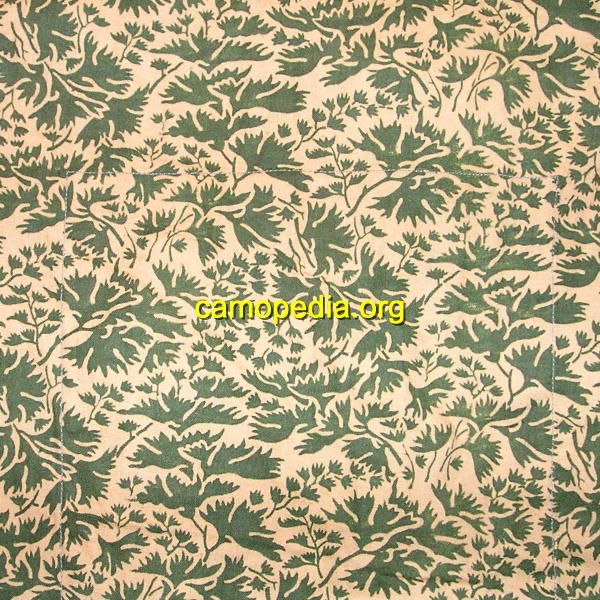
My research led me to purchase 10 yards of this fabric - also known as Tiger camo, that I found through an American source. This camo was used by the US in the Vietnam war - and of course used a lot of other places.


I would like to add other camo types to my assortment, and I would also like to add other fabric types like Cordura and rip-stop for instance.
- I will of course let you in on, how the collection continues to increase...

Here are some, that I like - and some of them I'm even actively looking for, so if you have a roll of fabric lying around, let me know.


I like this in a way, but it was mainly included because it is Danish


One Month of Denim - Day 30


Last day. I made it through. Each and every day for the past 30 days I sat down and did a post on denim. It has been hard, and I won't be doing a month like it for a very long time, if ever. I think a week suffice in the future. But I hope this has been of some help to some people, although the information I have provided you with, is probably rather basic for many of you. 

Today I was going to write about indigo dying, but I ran out of time, instead I got the idea to write about one simple term based on the pictures of the hairy denim on the work jacket from yesterday and that term is singeing.

Singeing is a process where a gas flame (most often, but I do believe you can also use razor shar knives) to burn of the tiny hairs on the denim or any other kind of fabric. This fluff is what you see on the surface, when you look across it and it looks almost sort of dusty. This fluff has been getting a revival because Japanese makers started introducing it again. To this one operator from Cone Mills noted, that they had invested heavily in singeing machines, but now the customers wanted overly hairy denim fabrics, so these expensive machines looked a bit useless now.

The fluff is generally a sign of an inferior cotton because of it shorter staple length. This is normally one of the qualities of cotton from Texas. However this is often how denim from the late 60's to early 80's looked.

I have even seen a pair of jeans from the Swedish brand Indigofera, where the hairyness has been overly exagareted. Again, not to anybodys taste, but it surely adds to the character.

Lastly a little Levi's commercial with lots of character.


Thursday, September 29, 2011

Henriques & Løvengreen

Sometimes you hear the phrase, they don't make 'em like this anymore. Actually a rather tiresome phrase, however there is some truth to it sometimes - or probably quite often.


In the case of this henley - by a now long-gone company called Henriques & Løvengreen - it is true. It is a product so well-made, that it becomes almost a piece of industrial art.

This type of henley was quite common among working men. But I have found other examples of it, and none of them has been as nice and as well-made as this one. It is made of a wool-cotton blend, that has been rather tightly woven on loopwheel machines - hence no side seam. The fabric offers very little stretch, which you might expect and it feels like the reverse has been combed for softness. The colour is so amazing with the melange and irregularities in the weave. 
I'm guessing that this is from the 30s to 50s, but I can't be entirely sure. If somebody knows, please tell me.


As you can see, there is some discolouration from storage. Other than that it is pristine, deadstock condition. I'm sure that the discolouration will go away if properly washed or dry cleaned.


The difference in knit on the cuffs is a great detail.


The insert in the pit is a typical detail of undergarments from back in the day.


Flawless construction and execution


This tag is so great


The stitching is perfect


All edges have been covered in this grosgrain-ish fabric


There is even a satin backing to reinforce the buttonholes and insure, that they keep their shape


In case you hadn't noticed the buttons are genuine mother of pearl buttons


Now this post wouldn't be anything without the video, that I found. The video shows the production at the Henriques&Løvengreen factory and it was made in 1910.

I can't embed it, but you can watch it here - remember to go Full screen.

One Month of Denim - Day 29

One Month of Denim is coming to an end. I was thinking about writing about the big three - Levi's, Wrangler and Lee, but you probably already know a lot about them, and if you don't it is fairly easy finding some trustworthy information elsewhere. Furthermore I figured giving you some Danish denim history might expand your horizon a bit.

Today's post may bear a resemblance to yesterday's post, however I figured it would still be of some interest. This FE Engel jacket I found recently. It is probably from the 50's or the 60's like the other jacket, but this is probably more recent. In case you are wondering, this jacket is slightly too small for me, so I'm sending off to a new, good friend of mine, who I think will appreciate it.

F. Engel was founded by Carl J. Engel Senior in 1927 in the Southern part of Denmark. Today the business is still family owned, however production has moved to Lithuania, just like it is the case with a lot of Danish makers.

Back in the days everything was cut and sewn in Denmark, often using what is known as "Bull Denim" from Erwin Mills in the US. For your information; Erwin Mills were the first to use Sanforisation, as mentioned in a previous post. Bull Denim is a rather heavy denim weave with the typical twill construction, except it is later piece dyed.
I don't think F. Engel continued using denim from Erwin Mills, I suspect, that they - along with other workwear makers - started using denim, that was woven locally on Grenaa Damvæveri, which closed it doors 10 years ago.

On to the jacket.


The construction is pretty basic. Short jacet with two front pockets.


Big front pockets with brass snap buttons. The pockets are internally reinforced.


As you can see all seams are felled and triple stitched. The two top buttons are snap buttons, whereas the rest are regular buttons.


Selvage runs down the placket and the buttons are hidden. Pretty crude construction.


Concealed button.


The waist is elasticized, which gives a more modern and in my opinion a better fit.


The denim is has a purple hue or cast.


Furthermore it is quite hairy and slubby, which is a sign of using a cotton with a short stable length. This is normally a sign of a poor quality, but it ads to the character in my opinion. Purists are sometimes going for this look - For instance Roy Slaper made a pair of contest jeans for Superfuture, which was made of a special fabric from Cone Mills, that was very hairy and slubby.


It even has some mill flaws, which again ads to the character.


The American inspiration becomes quite obvious, when you see, that the snaps are made by Scovill, which also supplied many of the big American jeans and workwear companies - including Levi's.


The tag is quite cute. You don't see anything like that anymore.