Sunday, September 25, 2011

One Month of Denim - Day 25


Until about an hour ago the Buddy Lee fan group had 101 fans, but then I joined the group, and the number rose to 102. I felt bad doing this, as I found it quite symbolic, that the group had 101 fans, knowing that the iconic Lee model is called 101. Was this a coincidence? I'll let you make up your own mind.


Buddy Lee. The little doll, that became the mascot for Lee or rather became synonomous Lee, was created by a Lee sales manager named Chester Reynolds. He was originally featured in Lee commercials from the 1920's to the beginning of the 1960's and he has later made appearances and still do so.

Buddy Lee is a highly collectable item in some of the early editions and can fetch very high prices to the right collector. Buddy Lee has been suited in all kinds of different outfits - from railroad worker to cowboy. Buddy has done all kinds of odd jobs.

Originally he was only supposed to be used as a sort of sales promotion in the shops. After the promotion shops were encouraged to sell the dolls to the customers. This caught on and later the small Buddy Lee doll was turned into a piece of sales merchandise and a succesful one. When Buddy was pulled from the market in 1962 it was the second-highest-selling doll in the US. 


Of course I also found a movie for you to watch.

Saturday, September 24, 2011

One Month of Denim - Day 24


As always my weekends are kind of busy, so again I find myself with very little time to write about denim. So today you will have to settle with a link to a visit to the Cone Mills White Oak plant in North Carolina. This visit was done by Mr. Denim - Paul Trynka.

Cone Mills was one of the original suppliers to denim - besides Amoskeag, which folded many years ago - and they are also the supplier of many other brands. Cone Mills denim is probably not the most interesting choice of denim, although their technical department have done some amazing fabrics like the "Tweed Denim", that the American brand, Left Field used for a very limited run of jeans. I helped a friend of mine get hold of a pair and I can truly testify, that they are very unique and very beautiful. What you do get, when you buy Cone Mills denim is a very strong, hard wearing and very reliable fabric. So it is obviously one of my favourite fabric, which is also why that I decided on buying Cone Mills denim, when I acquired some denim. Other than that the denim is still mainly woven in the US and they also offer some other fabrics such as indigo dyed selvage canvas and some pretty rad cotton duck.


For the article - GO HERE!

Friday, September 23, 2011

One Month of Denim - Day 23

I have been posting a lot of videos the last couple of days, and how I wish I could continue doing so. I know, I can't do so for all eternity, but I'll keep going for another day.

Here are some good denim-related videos in a mixed order and with a mixed quality or relevance.


If you have some denim videos, that you want to share, feel free to do so in the comments or send an e-mail and I'll them to the list

Thursday, September 22, 2011

Crafts - iPhone 3+4 Case


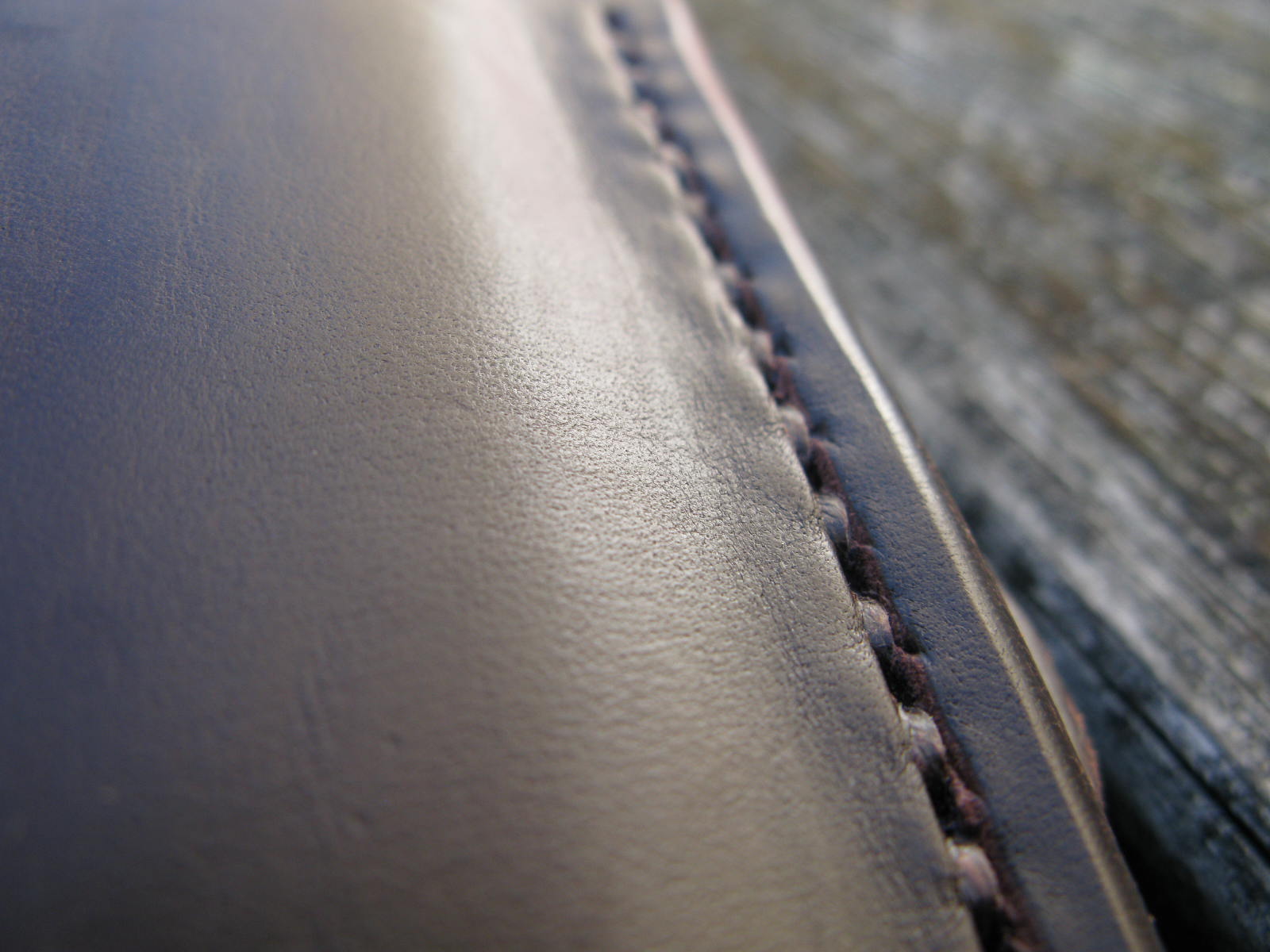
Lately I haven't quite been up to much in the basement. I have lacked time, energy and inspiration. But yesterday I decided to get down there and get to work! It was a struggle at first, but then I decided to make an iPhone case - another one - for myself and my girlfriend, as we both just bought one.

So yesterday I cut the leather and prepared the leather. Today I spent some time finishing it - although I must say that the edges haven't been burnished yet and the cases haven't been oiled. So consider them somewhat finished, but not quite.

The construction is pretty much the same as the previous one, except these cases were made in a darker vegetable tanned leather (from Italy) and instead of the polyester thread, I used a thinner (5ply) waxed linen thread from Barbour. I would have like to have used a thicker linen thread of 7 or 8 ply, but that's probably just me and I don't have that thickness in this colour at the moment. But besides that change and a couple of other twitches everything was the same, including the wet shaping.

Enjoy - and remember they are also on Flickr.


Red Wing - The Puritan Stitch Machine

If you like watching sewing machines, then I guess you are still high on the Roy video from yesterday. But before you cold turkey, I want to share this video from Red Wing. If you try to avoid some of the patos in the video, then you really get to see what looks like an amazing machine.

Enjoy


Affordable backpacks - Parrott Canvas, Drifter and Fjällräven

If you are on a budget and still want a descent backpack, there aren't many good options, but there are some. Here are three options.


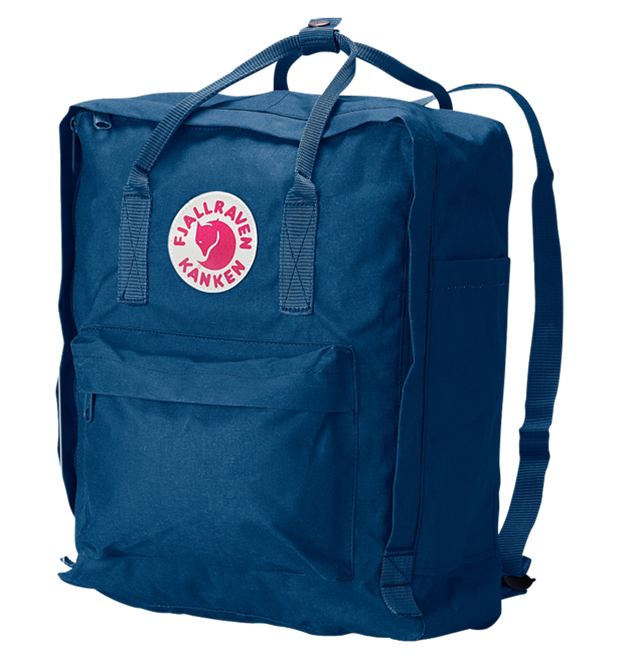
First off is the Scandinavian option, Kånken from Fjällräven. To many people living in the Scandinavian countries there are some connotations to the Kånken, which makes it seem very geriatric. But if you try to look at it with a more objective view, there is something cool about the iconic Kånken. Furthermore it is easy to carry, and the looks will improve with wear.

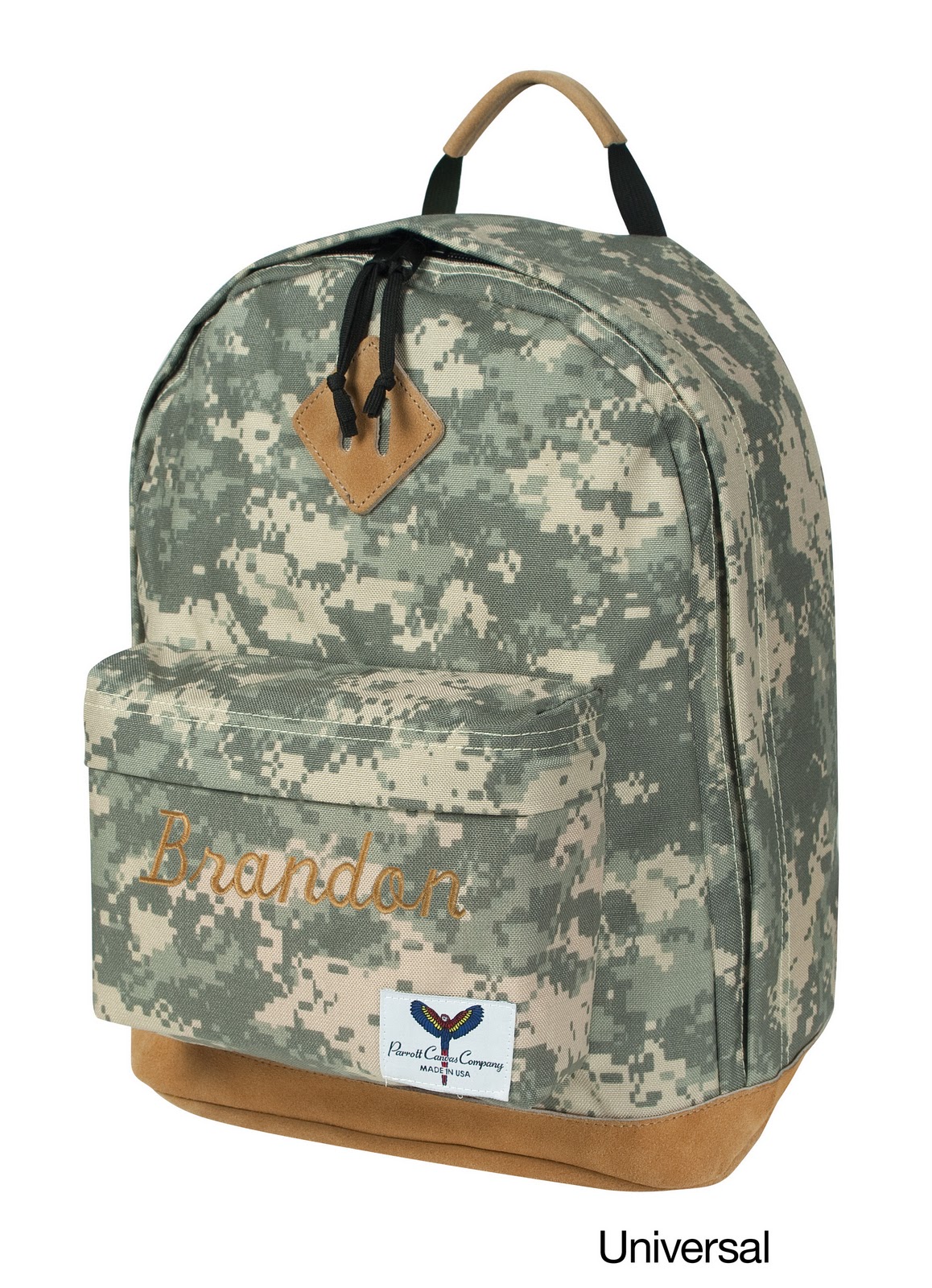
Please disregard the writing - it is a custom feature.

Please disregard the writing - it is a custom feature.
If you want some pretty good looking daypacks from a good American producer, then look no further than Parrott Canvas. Parrott Canvas is big in Japan, but the distribution outside of Japan and the US is limited to nothing. But the price of their packs makes it possible to order them from the US and still get good value. They have a lot of other good looking bags - like totes and toiletry bags.


If you want a US-made backpack, that is bang on the buck, then Drifter is the one for you. Cheap, well-made and decent quality at a price that can't be beat. Just like Parrott Canvas, Drifter has a pretty utilitarian assortment.

One Month of Denim - Day 22


There are some factors to what makes a great denim fabric and one of these factors are besides what cotton type, also how the cotton or rather cotton yarn is spun. When speaking of yarns used for denim there are generally three ways. The first being Ring-spun denim, second Ring-Ring denim or double ring-spun denim and finally Open-end denim.

Ring-spun denim was the most common method used up until the 1970s. In this method the cotton yarns are twisted together for a stronger and harder-wearing product, which will also fade like the actual vintage jeans.

The Ring-Ring denim creates the best quality denim, as it employs Ring-spun yarn for both the warp and the weft. This is the traditional way of producing denim.

Open End was introduced in the 1970s and it reduced the cost of producing denim, as well as reducing the quality in many ways. The cotton fibres are mock twisted by blowing them together. This creates a fabric that is more coarse, dark (because it absorbs more dye), bulkier and it doesn't wear or fade as well as Ring-spun denim because of the extra dye.

It is possible to create a denim using a Ring-spun warp and an Open-end weft. This gives the fabric some of the strength and the look of Ring-spun denim, but it is still cheaper. It should be said, that just because you are paying large amounts for a pair of jeans doesn't mean you are getting a quality product. Some of the biggest designer brands are known for using Open End denim...

Wednesday, September 21, 2011

One Month of Denim - Day 21

Roy Slaper of Roy Denim is an artist. No doubt about that. Just like Blue Highway, he is making his own jeans one by one, but he has got a bigger and better selection of machinery. The cool thing is that he makes everything himself and he does all of it on old machines from Singer and Union Special for instance. Before reading anymore you should just watch this video done by Self Edge.


When he started out he offered made to order jeans for customers through Superfuture and they were definitely in demand, so much that he decided to focus on making jeans and selling them online exclusively through Self Edge.

I think I could write a lot more about Roy and his one man operation, but I think many people have done so and done so with a great angle in the past, that I would much rather turn your attention to them. But may I just add, that I love the scalloped stitch, he uses.


Did I mention, that he makes a pair of fantastic jeans in duck cotton? Well, he does.

And did I mention, that there is another movie of his jeans-making-goodness floating around? Well, there is.

Nitty Gritty x Mackintosh

This is something else. I like it.


"At Nitty Gritty we strongly believe that an army green fishtail parka never goes out of fashion, especially if its handmade by people from the United Kingdom with decades of experience. For this season we decided to make our own touch on Mackintosh's coated cotton Kerrera coat with mohair lined hood. So, in order not to ruin the perfectly simple outside of the parka, we pimped it with a removable leopard print wool liner. What else could you possibly ask for? At least we are fully satisfied."


Constant Inspiration - Hiking Gear

Hiking clothing and gear from the 60's and 70's have long been an inspiration for me. The whole DIY movement of which many interesting brands spurred, is a reference for me again and again. For me it didn't start with Patagonia or the North Face, but it started with vintage Fjällräven jackets and Norwegian anoraks called Fjellanorakken. They were all made of a strong, utilitarian fabric made of a cotton and polyester. This fabric would wear well and fade well, and if you added just a bit of wax, it would also be water repellent, which is essential for Scandinavian weather.

Fast forward some years and I start seeing pictures of Sierra Designs 60/40 parkas (again, thank you Ready4thehouse) and I start going into the history of American hiking gear, which is primarily done through Oregon Photos , which is a great source for inspiration and knowledge. After having saved many an eBay search looking for rare pieces from Sierra Designs, Great Pacific Iron Works, Wilderness Experience and tons of other brands, I decided, that I shouldn't be collecting (I had the same realization with vintage denim), as I can hardly afford the clothes, that I actually intend to wear. 

What I do however keep looking for are sewing kits from Frostline and Holubar because I want to make my own mountain parka at some point - so please don't outbid me, if some good ones show up. I really admire the DIY part of that hiking movement. The companies would keep costs down by selling kits to avid hikers, who would then assemble the kits themselves on their own sewing machines. I really like that idea, and I would love if some company would start making kits like that again, though I know it will never happen. 

Long story short, I just wanted to say that I'm thrilled to see, that the US-made 60/40 Sierra Design parkas are finally available outside of Japan. It took a long time for them to be released. I first read about the re-release on Secret Forts (who has gone to a new location), but it has since been spreading fast. I'll pull the trigger, once the Pendleton wool lined versions start showing up. But you shouldn't hold back on some Sierra Designs goodness - buy one here, here or here for instance.

Lastly I'm glad to see that a company like Rivendell Mountain Works, which I'll be writing about really soon, is getting some attention, as well as the likes of Danner and Topo Designs for example Now one can only hope more people will open their eyes to companies like Limmer and other hidden gems.

Stay tuned for more write ups on hiking gear or stuff inspired by that era.